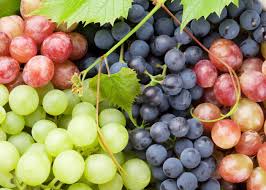
Today’s fruit review focuses on one of the smaller fruits, the humble grape.
Fruit of the vine, the grape comes in a myriad of shapes, sizes, and colors, each with their own flavor profiles.
In fact, the first instance of grapes recorded in human history lay in the heartland of middle eastern Asia around 8,000 years ago.
The country of Georgia produced one of the fruit’s most enduring innovations: wine.
Naturally-occurring yeast on the skin of a grape ferments over time, creating alcohol that when consumed can make certain folks rather tipsy.
For millennia to come, grapevines swept through Asia and into Europe where purple grapes were eaten by themselves, turned into wine, or fashioned into a jam.
Though a similar type of grape grew in North America, European settlers discarded the oval-shaped berries because they thought the North American grapes were not capable of making a fine wine.
Once Ephraim Bull started observing and growing his own grapes, the Massachusetts man named his new invention after his town, the concord grape.
Something that came as a surprise to me in research for this review is that a majority of the grapes produced on Earth don’t show up in a bag at the local market still attached to the vine.
The Food and Agriculture Organization estimates that nearly 71% of the world’s grapes are grown to be made into wine while just 27% are sold to us as fresh fruit with the remaining grapes being dried out and sold as raisins.
An important distinction between grapes sold in a bag and ones that get bottled up are their genetic makeup.
Bagged grapes have thinner skins and less sugar while vineyards harvest their thick-skinned grapes at the peak of their sweetness.
In all, there are over 10,000 different kinds of grapes just to make wine alone, and most familiar wine names actually derive from the grapes used to make them, including Reisling, Sauvignon Blanc, and Chardonnay.
In this review, I’m only highlighting ones I can get my hands on at the store, so let’s browse through the produce section!
Sultanas (White Seedless Grape)
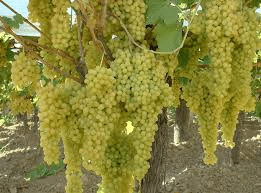
You know ’em. You love ’em. You can’t get enough of ’em.
Sultanas are the most common form of seedless grape in North America with almost all California raisin production coming from this species.
I enjoy these grapes by themselves and as raisins from time to time, but the best way to eat them comes by freezing them.
Take a bundle of sultanas, give them a healthy rinse, put them back in their original bag or in a more-enclosed plastic zipper bag, and place them in your freezer.
Within hours, you have a sweet and tangy frozen treat that you and a friend or two could share on a particularly hot afternoon.
Otherwise, sultanas became a staple of my diet from an early age as they were easy to get my hands on and eat a lot of without feeling bad about myself.
Concord Grape
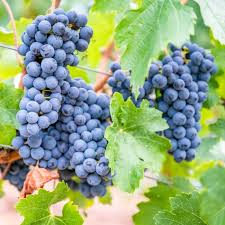
Even if you were allergic to grapes or peanut butter, you have no doubt heard of the greatness of the concord grape that was developed in the mid-19th century right here in the United States.
The concord grape remains one of the more versatile fruits in our country, rising to prominence through its uses in jellies, jams, and grape juice.
When picking up a grape-flavored soda (such as Mountain Dew Pitch Black), companies use methyl anthranilate — the chemical that gives the concord grape its taste to achieve an authentic grape flavoring rather than using 100% grape juice.
These grapes hold less tartness than their white counterparts, making for a sweeter bite that makes them a more ideal frozen fruit for some.
As someone that grew these in my backyard as a kid, concord grapes occupy a special place in my heart and diet because of their sweet taste and versatility.
Moon Drop Grapes (Sweet Sapphires)
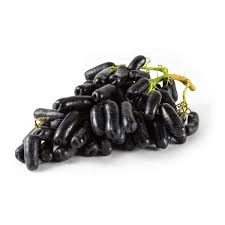
You ever run into these weird little guys?
These are a modern creation by the folks over at International Fruit Genetics. Helmed by Dr. David Cain, the group debuted their newest creation in 2004 alongside a white sister species, Tear Drops.
Defined by their dark skin and long body, the Moon Drop grape has grown in popularity due to its super sweet taste and novel appearance.
Having frozen a set of these at one point, I can proudly say that these are my favorite breed of grape both eaten straight-up and frozen.
The one issue I have with them remains that they are harder to obtain than sultanas and concords, meaning I don’t have the access to these that I’d prefer.
Don’t get it twisted; I would eat these every damn day if given the chance.
Cotton Candy Grapes
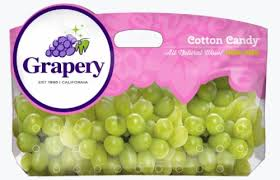
That David Cain is crazy about grape genetics.
Much like the Moon Drop, IFG crafted this evolution in grapes in the 2000s with collaboration from the University of Arkansas.
Hitting produce sections everywhere in 2010, this species of grape has taken off and become a phenomenon, routinely being paraded around by influencers on social media that run into the niche grape.
Influencers parade the cotton candy grape around for good reason: it’s delicious.
This isn’t false advertising: they actually taste like cotton candy!
Locking these little berries in a bag in my freezer and eating them was a great decision I look back upon fondly as these grapes taste better frozen than any cotton candy-flavored/themed ice cream I’ve ever had.
To top it all off, these grapes are an infinitely better alternative to actual cotton candy, so a handful of these grapes taste sweeter than honey straight from the comb without any of the drawbacks that come with eating cotton candy.
Conclusion
Grapes are the best fruit on Earth unless you are a dog. Please refrain from giving grapes or raisins to your furry canine friends as they are toxic to their kidneys!
That said, they serve a plethora of functions and come in an incalculable amount of varieties grown all over the world.
If I had to stick with eating one kind of fruit for the rest of my days, I’d select grapes without any hesitation.
Grade: A+
 The Wide World of Dirt
Leave a comment